
Private nonprofit · College
Yeshiva D'monsey Rabbinical College
Monsey, New York · Large suburb
- 36.8%
- Admit rate
- $8,289
- Avg net price
- 6%
- Graduation rate
- —
- Median earnings
Yeshiva D'monsey Rabbinical College is a private nonprofit bachelor's-granting institution in Monsey, New York (large suburb setting), enrolling 84 undergraduates. It is a men's college.
About Monsey, New York
Monsey is a hamlet and census-designated place in the town of Ramapo, Rockland County, New York, United States, north of Airmont, east of Viola, south of New Hempstead, and west of Spring Valley. Numerous artifacts have been found there and some rock shelters are still visible. The Monsey railroad station, named from an alternate spelling of the Munsee Lenape, was built when the New York & Erie Railroad passed through the glen in 1841. (Wikipedia)
- Setting
- Large suburb
- Highest degree offered
- Bachelor's
- Nearest big city
- 28 miles to New York, NY
- To the ocean
- 8 miles
- Nearest airport
- 18 miles to Teterboro (TEB)
How Yeshiva D'monsey Rabbinical College compares
More selective than 91% · #16 most selective of 137 in New York
Higher than 2% · #155 of 159 in New York
Higher than 5%
Cheaper than 95% · #26 cheapest of 153 in New York
Lower than 59%
Larger than 7%
Percentiles compare Yeshiva D'monsey Rabbinical College with the nation's 2,196 four-year colleges, among schools reporting each statistic. State ranks count four-year colleges in New York.
Student body
Undergraduates by race / ethnicity
- White100%
Graduate gender splits aren't published in this data, so the gender chart covers undergraduates only.
By the numbers
- Undergraduate enrollment
- 84
- Student–faculty ratio
- 12 : 1
- Pell Grant recipients
- 76%
- First-generation students
- —
- Students over 25
- —
- Median family income
- $12,750
- Avg faculty salary (academic year)
- $31,437
Colleges don't publish true class-size data; student–faculty ratio (IPEDS) is the closest public measure of it.
Admissions
- Admission rate
- 36.8%
- Test scores
- Not considered
- SAT range (25th–75th %)
- —
- SAT average
- —
- SAT reading
- —
- SAT math
- —
- ACT composite
- —
Cost
- In-state tuition
- $9,200
- Room & board
- $5,100
- Books & supplies
- $300
- Total cost of attendance
- $20,600
- Average net price
- $8,289
Net price is the total cost minus grants and scholarships — what students actually pay. It varies sharply by family income; see the breakdown below.
Outcomes
- Graduated (within 6 years)
- 6%
- Graduated on time (4 years)
- 0%
- First-year retention
- 48%
- Transferred to another college
- 94%
- Median earnings, 6 years after entry
- —
- Median earnings, 10 years after entry
- —
- Median debt at graduation
- —
- Students with federal loans
- 0%
Campus life & athletics
- On-campus housing
- Yes
- Dorm capacity
- 98
- Dorm capacity vs undergrads
- 100%+
- Housing charge (year)
- $2,550
- Meal plan (year)
- $2,550
- Application fee
- Free
Housing and fees: IPEDS 2023–24. Athletics rosters: Equity in Athletics data, 2024–25. Dorm capacity can include graduate and family housing, so the share of undergrads can top 100%.
What you'll actually pay, by family income
Average net price (total cost minus grants and scholarships) paid by aided students in each family-income band.
College Scorecard / IPEDS, most recent year. Family income is total household income; net price covers tuition, fees, room, board and supplies after grant aid, for students receiving federal aid.
Four-year (or more) true cost
Net price for your family's income, projected across the time it actually takes students here to graduate.
$8,958/year × about 5.5 years — most students here don't finish in exactly four, and each extra term adds cost. A planning estimate from net-price and graduation-timing data, not a bill.
Does the school pay you to attend?
Grant aid from the school's own funds — the discount off sticker, on top of any federal or state help.
Modest institutional aid: 40% of freshmen get a grant from the school, averaging $2,494. Most of what lowers the price here is federal or state money, not the school's own funds.
Blends need-based and merit aid — IPEDS doesn't split the two, so a high number can mean generous merit scholarships, deep need-based aid, or both. Figures cover 25 full-time first-year undergraduates, 2022–23. Source: IPEDS Student Financial Aid.
Campus climate
- Summer high
- 84°F
- Winter low
- 20°F
- Annual rain
- 48.2″
- Annual snow
- 32.7″
Average temperature
HighLowAverage precipitation (inches)
NOAA 1991–2020 climate normals, Wanaque Raymond Dam, NJ US station (12.8 mi from campus).
What Yeshiva D'monsey Rabbinical College graduates study — and earn
Median earnings of this school's own graduates 1 and 5 years after finishing each program, and median federal-loan debt at completion (College Scorecard). Small programs are privacy-suppressed (—). Click a major to compare colleges nationally.
Colleges similar to Yeshiva D'monsey Rabbinical College
Schools with a comparable profile — size, selectivity, cost, and graduate outcomes. Compare Yeshiva D'monsey Rabbinical College side by side →

Bais Medrash Elyon
Monsey, New York · Large suburb · 28 mi to New York
- Students
- 61
- Admission
- 38%
- Net price
- $8k
- SAT
- —
- GPA
- —
- Earnings
- —

Yeshiva of Ocean
Greenfield Park, New York · Distant rural · 64 mi to Scranton
- Students
- 63
- Admission
- 36%
- Net price
- $9k
- SAT
- —
- GPA
- —
- Earnings
- —

Yeshiva Gedolah Kesser Torah
Monsey, New York · Large suburb · 29 mi to New York
- Students
- 84
- Admission
- 52%
- Net price
- $10k
- SAT
- —
- GPA
- —
- Earnings
- —

Beth Medrash of Asbury Park
Lakewood, New Jersey · Large suburb · 47 mi to New York
- Students
- 124
- Admission
- 54%
- Net price
- $10k
- SAT
- —
- GPA
- —
- Earnings
- —

Yeshiva Toras Chaim
Lakewood, New Jersey · Large suburb · 43 mi to New York
- Students
- 227
- Admission
- 44%
- Net price
- $5k
- SAT
- —
- GPA
- —
- Earnings
- $63k

Baptist University of Florida
Graceville, Florida · Distant rural · 81 mi to Tallahassee
- Students
- 360
- Admission
- 36%
- Net price
- $10k
- SAT
- —
- GPA
- —
- Earnings
- $43k
Colleges near Yeshiva D'monsey Rabbinical College
Bais Medrash Elyon
Monsey, NY · Private nonprofit · Bachelor's · 61 students
Yeshiva Shaar Ephraim
Monsey, NY · Private nonprofit · Bachelor's · 113 students
Yeshivath Viznitz
Monsey, NY · Private nonprofit · Bachelor's · 1,159 students
Mechon L'hoyroa
Monsey, NY · Private nonprofit · Bachelor's · 122 students
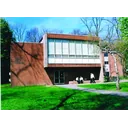
Rabbinical College Beth Shraga
Monsey, NY · Private nonprofit · Associate · 52 students

Ohel Margulia Seminary
Monsey, NY · Private nonprofit · Associate · 280 students
Yeshiva Gedolah Kesser Torah
Monsey, NY · Private nonprofit · Bachelor's · 84 students

Beth Medrash Meor Yitzchok
Monsey, NY · Private nonprofit · Associate · 226 students
Source: US Department of Education College Scorecard (most recent cohorts), IPEDS institutional characteristics, Equity in Athletics (EADA) data, Clery Act Campus Safety and Security data, and NOAA US Climate Normals. Distances are straight-line from campus coordinates. Percentiles compare schools of the same level (four-year vs. two-year) that report each statistic.