
Public · University
University of Nebraska Medical Center
Omaha, Nebraska · Large city
- —
- Admit rate
- —
- Avg net price
- —
- Graduation rate
- $76,833
- Median earnings
University of Nebraska Medical Center is a public bachelor's-granting institution in Omaha, Nebraska (large city setting), enrolling 938 undergraduates.
About Omaha, Nebraska
Omaha is the most populous city in the U.S. state of Nebraska. In 1804 the Lewis and Clark Expedition passed the riverbanks where the city of Omaha would be built. Omaha's Boys Town was made famous by the 1938 Spencer Tracy and Mickey Rooney movie Boys Town. (Wikipedia)
- Setting
- Large city
- Highest degree offered
- Graduate
- Nearest big city
- 2 miles to Omaha, NE
- To Great Lakes shore
- 425 miles
- Nearest airport
- 5 miles to Eppley Airfield (OMA) · major hub
How University of Nebraska Medical Center compares
Higher than 89% · #1 of 21 in Nebraska
Lower than 90%
Lower than 98%
Larger than 35%
Percentiles compare University of Nebraska Medical Center with the nation's 2,196 four-year colleges, among schools reporting each statistic. State ranks count four-year colleges in Nebraska.
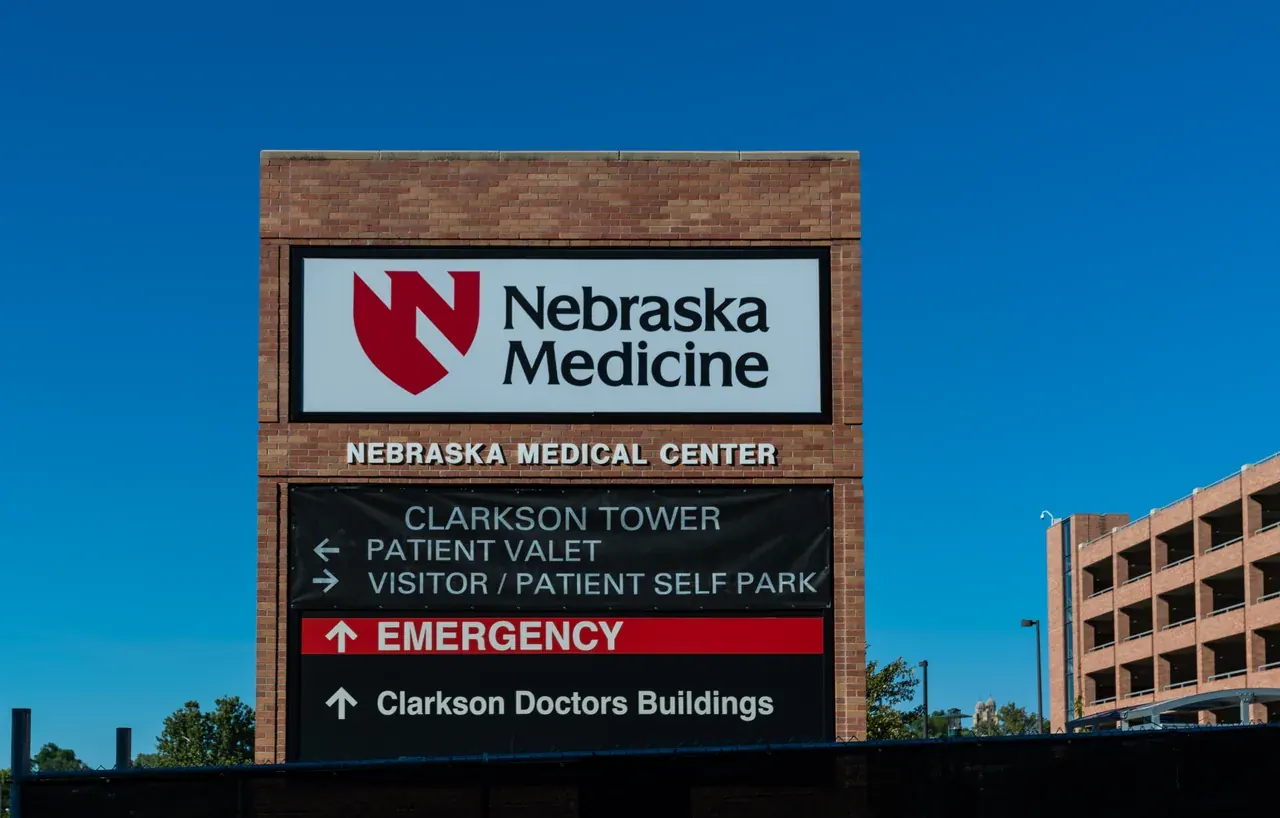
University of Nebraska Medical Center campus
Student body
Undergraduate vs. graduate
- Undergraduate93824%
- Graduate3,01776%
Undergraduates by gender
- Women81387%
- Men12513%
Undergraduates by race / ethnicity
- White74%
- Black3.8%
- Hispanic12%
- Asian4.2%
- Other or multiracial5.3%
Graduate gender splits aren't published in this data, so the gender chart covers undergraduates only.
By the numbers
- Undergraduate enrollment
- 938
- Graduate enrollment
- 3,017
- Student–faculty ratio
- 3 : 1
- Pell Grant recipients
- 22%
- First-generation students
- 27%
- Students over 25
- 22%
- Median family income
- $50,020
- Avg faculty salary (academic year)
- $88,956
- Endowment
- $495,847,983
Colleges don't publish true class-size data; student–faculty ratio (IPEDS) is the closest public measure of it.
Outcomes
- Graduated
- —
- First-year retention
- —
- Median earnings, 6 years after entry
- $70,417
- Median earnings, 10 years after entry
- $76,833
- Median debt at graduation
- $15,000
- Students with federal loans
- 47%
- Paying down their loans (1 year in)
- 87%
Graduating on time
By student background (4 years)
When these bars run close together, students from every background tend to finish at similar rates — a sign the school supports the ~30% who are first-gen or low-income.
Campus life & athletics
- On-campus housing
- No
- Application fee
- $60
Housing and fees: IPEDS 2023–24. Athletics rosters: Equity in Athletics data, 2024–25. Dorm capacity can include graduate and family housing, so the share of undergrads can top 100%.
Campus safety
- Safety grade
- D
- Reported offenses per 1,000 students
- 5.4 / year
- Violent offenses (2022–2024)
- 35
- Property offenses (2022–2024)
- 30
On-campus criminal offenses reported under the Clery Act, 2022–2024, across 5 campuses (3,988 students). Counts reflect reports, not convictions — schools with strong reporting cultures often show more, so a higher count doesn't simply mean a more dangerous campus.
Reported offenses in an average year
The same 2022–2024 Clery Act reports, divided down to one year.
By offense type, per year
Averages, not a forecast — a single year can run well above or below this. Bars are scaled against this campus's most-reported offense, so they compare types here rather than against other schools.
Is it worth it?
A rough return-on-investment read from what graduates earn versus what they borrow.
- Median earnings (10 years)
- $76,833
- Typical debt at graduation
- $15,000
- Debt vs. one year's pay
- 20%
- Out-earn a HS grad
- 94%
Typical debt would take roughly 2.0 years to repay at about a tenth of median earnings.
Graduates here tend to earn well relative to what they borrow — typical debt pays back fast, and most out-earn a high-school graduate.
Earnings are the College Scorecard median for former students (working, not enrolled) 10 years after entry — not a guarantee, and they vary a lot by major. Debt is the median federal loan balance at graduation.
The pay gap here
Median earnings 10 years after entry, split by gender.
Men out-earn women by $21,906 (29%) a decade out.
Federal figures for former students working and not enrolled, 10 years after they first entered. A gap this wide usually reflects which majors men and women here tend to choose — not different pay for the same job.
Campus climate
- Summer high
- 88°F
- Winter low
- 15°F
- Annual rain
- 31.9″
- Annual snow
- 27.1″
Average temperature
HighLowAverage precipitation (inches)
NOAA 1991–2020 climate normals, Omaha Eppley Airfield, NE US station (5.4 mi from campus).
What University of Nebraska Medical Center graduates study — and earn
Median earnings of this school's own graduates 1 and 5 years after finishing each program, and median federal-loan debt at completion (College Scorecard). Small programs are privacy-suppressed (—). Click a major to compare colleges nationally.
Colleges similar to University of Nebraska Medical Center
Schools with a comparable profile — size, selectivity, cost, and graduate outcomes. Compare University of Nebraska Medical Center side by side →

New Mexico Institute of Mining and Technology
Socorro, New Mexico · Remote town · 72 mi to Albuquerque
- Students
- 995
- Admission
- 44%
- Net price
- $10k
- SAT
- 1207
- GPA
- 3.5
- Earnings
- $76k

Louisiana State University Health Sciences Center-New Orleans
New Orleans, Louisiana · Large city · 1 mi to New Orleans
- Students
- 862
- Admission
- —
- Net price
- —
- SAT
- —
- GPA
- —
- Earnings
- $78k

University of Connecticut-Waterbury Campus
Waterbury, Connecticut · Midsize city · 18 mi to New Haven
- Students
- 733
- Admission
- 87%
- Net price
- $11k
- SAT
- 1060
- GPA
- 3.0
- Earnings
- $74k
The University of Texas Health Science Center at San Antonio
San Antonio, Texas · Large city · 8 mi to San Antonio
- Students
- 930
- Admission
- —
- Net price
- —
- SAT
- —
- GPA
- —
- Earnings
- $82k

Virginia Military Institute
Lexington, Virginia · Distant town · 45 mi to Roanoke
- Students
- 1,527
- Admission
- 71%
- Net price
- $17k
- SAT
- 1244
- GPA
- 3.5
- Earnings
- $77k

University of Connecticut-Hartford Campus
Hartford, Connecticut · Midsize city · < 1 mi to Hartford
- Students
- 1,525
- Admission
- 88%
- Net price
- $16k
- SAT
- 1073
- GPA
- 3.1
- Earnings
- $74k
Colleges near University of Nebraska Medical Center

Clarkson College
Omaha, NE · Private nonprofit · Bachelor's · 622 students

Creighton University
Omaha, NE · Private nonprofit · Bachelor's · 4,348 students

University of Nebraska at Omaha
Omaha, NE · Public · Bachelor's · 11,488 students

College of Saint Mary
Omaha, NE · Private nonprofit · Bachelor's · 445 students
Metropolitan Community College Area
Omaha, NE · Public · Associate · 8,775 students

Nebraska Methodist College of Nursing & Allied Health
Omaha, NE · Private nonprofit · Bachelor's · 781 students
CHI Health School of Radiologic Technology
Omaha, NE · Private nonprofit · Bachelor's · 29 students

Xenon A Stephanie Moss Academy
Omaha, NE · Private for-profit · Certificate · 241 students
Source: US Department of Education College Scorecard (most recent cohorts), IPEDS institutional characteristics, Equity in Athletics (EADA) data, Clery Act Campus Safety and Security data, and NOAA US Climate Normals. Distances are straight-line from campus coordinates. Percentiles compare schools of the same level (four-year vs. two-year) that report each statistic.